How to Choose an Inorganic Ion Scavenger for Epoxy Molding Compounds and Adhesives (2026)
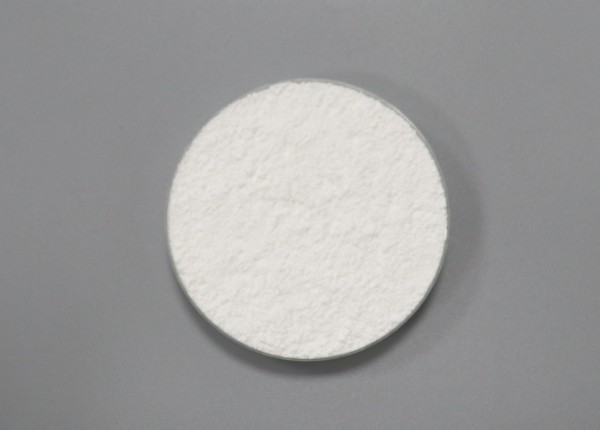
An inorganic ion scavenger is a fine powder that captures free ionic impurities, such as sodium, chloride, bromide or copper ions, from a resin by ion exchange, so they cannot migrate to metal in an electronic device. In epoxy molding compounds, FPC adhesives and solar encapsulant film, these ions can come from raw materials and processing, and moisture can carry them to wiring and contacts. Langyi's GrabMax® NL series has 5 grades: 1 cation exchanger, 2 anion exchangers and 2 dual-ion exchangers, with particle sizes from 0.37 to 0.55 µm and temperature resistance from 300 °C to 550 °C. This guide shows how to choose a grade by target ion, exchange capacity, particle size and process temperature.
Data in this guide is taken from Langyi product sheets as of November 2026. Confirm values against the current technical data sheet before you fix a formulation.
Quick Answer: Which GrabMax® Grade Should You Use?
Pick by the ion you need to remove. GrabMax® NL-001 targets sodium (Na⁺ 6.6 meq/g), NL-002 and NL-004 target chloride (Cl⁻ 4.6 and 3.8 meq/g), and the dual-ion grades NL-003A and NL-005A capture cations and anions together. NL-003A is the grade with a listed copper capacity.
| Target ion | GrabMax® grade | Listed capacity |
|---|---|---|
| Sodium and other cations | NL-001 (cation) | Na⁺ 6.6 meq/g |
| Chloride, highest listed capacity | NL-002 (anion) | Cl⁻ 4.6 meq/g |
| Chloride, finest particle size | NL-004 (anion) | Cl⁻ 3.8 meq/g; 0.37 ± 0.20 µm |
| Copper plus sodium and chloride | NL-003A (dual ion) | Cu²⁺ 2.8, Na⁺ 1.5, Cl⁻ 0.4 meq/g |
| Sodium and chloride together | NL-005A (dual ion) | Na⁺ 1.4, Cl⁻ 2.3 meq/g |
All 5 grades are listed on one page: GrabMax® NL series inorganic ion scavengers.
Why Free Ions Matter in Electronic Materials
Free ions such as Na⁺ and Cl⁻ in an epoxy molding compound or adhesive can be extracted by moisture and carried to metal wiring, where they promote corrosion and leakage. GrabMax® grades bind these ions by selective ion exchange, which reduces the corrosive ions that can be extracted from epoxy and other resins and improves the reliability of electronic materials.
Because the scavenger is an inorganic solid, it stays in the resin as a filler-like additive. Langyi lists the NL series as heat and radiation resistant, resistant to organic reagents and strong oxidizers, and effective at high temperature or in water-free systems.
About Langyi and the GrabMax® Range
Langyi is a Chinese developer and manufacturer of functional additives for plastics, films, coatings and electronic materials, founded in Shanghai in August 2010. GrabMax® is its ion scavenger brand, aimed at electronic resins, adhesives and solar encapsulant film.
The GrabMax® NL series covers cation, anion and dual-ion exchange in 5 grades, so one supplier can address sodium, chloride and copper contamination in the same project. Langyi develops its materials in Songjiang, Shanghai, produces at its base in Laiyang, Yantai, Shandong Province, and reports 86 granted patents and R&D spending above 10% of revenue. In 2022 it was recognized as a National-level Specialized and Sophisticated "Little Giant" Enterprise in China. The company also makes AntistaMax® conductive powder and the ZR-100 flame retardant synergist, which electronics formulators often evaluate alongside ion scavengers. Browse the ion scavenger collection, see Electronics & Semiconductor additives or read more about Langyi.
Cation, Anion or Dual-Ion: The Five Grades
The 5 GrabMax® NL grades split by exchange type: NL-001 is a cation exchanger, NL-002 and NL-004 are anion exchangers, and NL-003A and NL-005A exchange both. Capacities, particle sizes and temperature limits below are the values in Langyi's product sheet.
| Property | NL-001 | NL-002 | NL-003A | NL-004 | NL-005A |
|---|---|---|---|---|---|
| Ion exchange type | Cation | Anion | Dual ion | Anion | Dual ion |
| Adsorption capacity (meq/g) | Na⁺ 6.6 | Cl⁻ 4.6 | Cu²⁺ 2.8, Na⁺ 1.5, Cl⁻ 0.4 | Cl⁻ 3.8 | Na⁺ 1.4, Cl⁻ 2.3 |
| Particle size (µm) | 0.50 ± 0.20 | 0.45 ± 0.20 | 0.50 ± 0.20 | 0.37 ± 0.20 | 0.55 ± 0.20 |
| Temperature resistance | 550 °C | 400 °C | 300 °C | 400 °C | 300 °C |
Choosing by Target Ion and Capacity
Start from your ion analysis. If extraction tests show mainly sodium, NL-001 has the highest listed capacity of the series at 6.6 meq/g Na⁺. If chloride dominates, NL-002 offers 4.6 meq/g Cl⁻. If both appear, a dual-ion grade or a blend of a cation and an anion grade covers them.
- Chloride only: NL-002 for capacity, NL-004 where a finer powder helps dispersion or thin layers.
- Sodium only: NL-001.
- Sodium and chloride: NL-005A (Na⁺ 1.4, Cl⁻ 2.3 meq/g), or NL-001 plus NL-002.
- Copper: NL-003A, the only grade with a listed Cu²⁺ capacity (2.8 meq/g).
The product sheet also names bromide and silver among the ions the series captures; ask for data on the grade that matches your contamination profile.
Particle Size and Temperature Resistance
All 5 grades are submicron, from 0.37 ± 0.20 µm for NL-004 to 0.55 ± 0.20 µm for NL-005A. Temperature resistance ranges from 300 °C for the dual-ion grades to 550 °C for NL-001, with the 2 anion grades at 400 °C.
Check the limit against your highest process step, not just the cure. Epoxy molding and adhesive curing run well below these values, but a grade compounded into a hot-melt or extruded film should still be chosen with margin. Where several grades fit, a finer powder such as NL-004 can be easier to disperse in thin adhesive layers.
Applications
Langyi lists 5 application areas for the GrabMax® NL series: IC epoxy molding compounds and semiconductor packaging, FPC and electronic adhesives, solar encapsulant materials including EVA film, anti-corrosion coatings, and high-performance resins and functional films.
For EVA encapsulant film, Langyi recommends NL-002 at 0.8–2%, mixed with EVA resin pellets and then melt-extruded into film. It is part of a 3-grade solar set with an anti-PID masterbatch and HyMax® EV521; see Solar PV additives. For epoxy and adhesive systems, the right loading depends on your formulation.
Running a Trial
A useful trial request includes 5 details. With them, Langyi's technical team can recommend a grade, or a cation and anion pair, and a starting level for your formulation.
- Resin system: epoxy molding compound, FPC adhesive, EVA film or coating.
- Ions you need to reduce and current extraction test results, if available.
- Highest process temperature (compounding, extrusion or cure).
- Filler type and loading, and any limit on particle size.
- Reliability test you need to pass.
Frequently Asked Questions
Which GrabMax® grade removes chloride ions?
NL-002 (Cl⁻ 4.6 meq/g) and NL-004 (Cl⁻ 3.8 meq/g, 0.37 µm) are the anion exchange grades. NL-005A captures chloride together with sodium.
How much GrabMax® NL-002 should I add to EVA encapsulant film?
The recommended addition is 0.8–2%. Mix it with EVA resin pellets, then melt and extrude into film.
Do GrabMax® ion scavengers work in water-free systems?
Yes. Langyi lists the NL series as staying effective at high temperature or in water-free systems, and as resistant to organic reagents and strong oxidizers.
What temperature can GrabMax® grades withstand?
NL-001 is listed to 550 °C, NL-002 and NL-004 to 400 °C, and the dual-ion grades NL-003A and NL-005A to 300 °C.
Conclusion
Choose a GrabMax® grade by the ion you need to remove: NL-001 for sodium, NL-002 or NL-004 for chloride, NL-003A for copper and NL-005A for sodium and chloride together. Then check particle size and temperature resistance against your process, and confirm the loading in a trial.
Request a Data Sheet or Sample
Tell us your polymer or resin system, your process and the property you need to improve. Our technical team replies with a grade recommendation, the technical data sheet and sample availability.
Related Guides
- Monomeric vs Polymeric Carbodiimide Hydrolysis Stabilizers
- Silver vs Zinc vs Copper Antimicrobial Additives
- Polycarbodiimide vs Blocked Isocyanate Crosslinkers
- Cesium Tungsten Oxide: Powder vs Dispersion vs Masterbatch
- How to Choose a Carbodiimide Anti-Hydrolysis Agent Supplier in China
- How to Choose an Antimicrobial Additive Manufacturer in China
- Polymer Additive Manufacturer vs Trading Company in China
- Chain Extender Powder vs Masterbatch for Recycled PET and PLA
- Conductive vs Ionic Antistatic Agents for Plastics and TPU
- Acidic vs Alkaline Odor Absorbers for Plastics
- Zirconium Phosphate Flame Retardant Synergist
- How to Choose a Cesium Tungsten Oxide Supplier in China
- How to Choose an Inorganic Ion Scavenger Supplier
- All technical guides