
Conductive vs Ionic Antistatic Agents for Plastics and TPU (2026)
An antistatic agent is an additive that lowers the electrical resistance of a plastic so static charge drains away instead of building up, typically into the 10⁶–10⁹ Ω·cm range. Two mechanisms are common: electronic conduction through a network of conductive particles, and ionic conduction through mobile ions. Langyi offers one of each: AntistaMax® D101, a light gray conductive titanium dioxide powder with a powder resistivity below 10 Ω·cm, and AntistaMax® E2000-T, an ionic liquid antistatic agent for TPU that sets resistance between about 7×10⁸ Ω and 1×10⁵ Ω at 0–3% dosage. This guide compares the 2 and shows which suits your polymer, color and target resistance.
Data in this guide is taken from Langyi product sheets as of November 2026. Confirm values against the current technical data sheet before you fix a formulation.
Quick Answer: Which Antistatic Agent Should You Use?
Use AntistaMax® E2000-T for polyester or polyether TPU, including transparent parts, when you want to set surface resistance by dosage. Use AntistaMax® D101 when you need a permanent conductive filler that tolerates up to 800 °C and allows light-colored or near-white formulations.
| AntistaMax® D101 | AntistaMax® E2000-T | |
|---|---|---|
| Mechanism | Electronic conduction (conductive layer on nano TiO₂) | Ionic conduction (ionic conductor) |
| Form | Light gray powder, particle size <1.0 µm | Liquid, density 1143.61 kg/m³ at 20 °C |
| Key value | Powder resistivity <10 Ω·cm at 25 MPa | Resistance about 7×10⁸ Ω to 1×10⁵ Ω |
| Dosage | Set in your trial | 0–3% by target surface resistance |
| Color | L = 85.0 ± 3.0; near-white formulations possible | Colorless, transparent and colored TPU |
| Stability | Thermally stable to 800 °C; resists acids, alkalis, salts, solvents | Does not change TPU hardness, flexural modulus or strength |
Electronic vs Ionic Conduction
In a conductive-filler system such as AntistaMax® D101, charge travels through touching or closely spaced conductive particles, so the effect depends on loading and dispersion rather than on surface moisture. In an ionic system such as AntistaMax® E2000-T, charge is carried by mobile ions dissolved in the polymer.
Conductive fillers are usually chosen for long-term antistatic parts where a stable, permanent network matters. Ionic agents are usually chosen where the polymer dissolves them well, as TPU does, and where clarity or low loading matters. Langyi lists both as long-term antistatic solutions; the right choice depends mainly on your polymer, color and target resistance.
About Langyi and AntistaMax®
Langyi is a Chinese developer and manufacturer of functional polymer additives, founded in Shanghai in August 2010, with R&D in Songjiang, Shanghai and production at its Yantai base in Shandong Province, in operation since 2020. AntistaMax® is its antistatic brand, built on the same inorganic powder know-how as its AntibacMax® antimicrobial and AntibariMax® infrared blocking ranges.
D101 applies a metal-based conductive layer to nano titanium dioxide, and E2000-T is formulated for the TPU market, where Langyi also supplies HyMax® hydrolysis stabilizers and a polyester TPU anti-hydrolysis masterbatch. A TPU producer can therefore source antistatic and anti-hydrolysis additives together. Langyi reports 86 granted patents and R&D spending above 10% of revenue. Browse the antistatic agent collection or read more about Langyi.
AntistaMax® D101 Conductive Titanium Dioxide
AntistaMax® D101 is rutile titanium dioxide coated with a uniform, stable metal-based conductive layer. Its compacted powder resistivity is below 10 Ω·cm at 25 MPa, its particle size below 1.0 µm and its color value L = 85.0 ± 3.0, light enough for near-white or pale antistatic products.
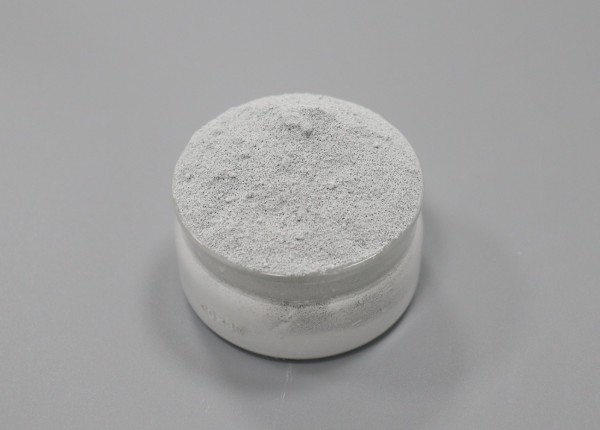
Langyi lists D101 for long-term antistatic products targeting 10⁶–10⁹ Ω·cm. It is thermally stable to 800 °C, with some flame retardant effect, and resists acids, alkalis, salts and organic solvents. Carbon black reaches similar resistance but turns parts black; a light-colored conductive filler is the usual alternative when color matters. Loading depends on resin and target resistance, so plan a ladder trial.
AntistaMax® E2000-T Liquid Antistatic Agent for TPU
AntistaMax® E2000-T is a liquid ionic conductor made for polyester and polyether TPU. At 0–3% dosage it sets resistance between about 7×10⁸ Ω and 1×10⁵ Ω, in colorless, transparent and colored formulations, and it does not change the TPU's hardness, flexural modulus or strength.
Langyi lists long-term antistatic, static dissipative and static discharge functions for E2000-T. Choose the dosage from the surface resistance your product needs, measure it on molded or extruded samples and confirm the test method with your customer. The safety data sheet gives handling details for the liquid.
Choosing by Polymer, Color and Target Resistance
- TPU, transparent or colored: E2000-T, dosed 0–3% to the target resistance.
- Light-colored or near-white part in another polymer: D101.
- High processing temperature or harsh chemicals: D101, stable to 800 °C and resistant to acids, alkalis, salts and solvents.
- Mechanical properties must not change: E2000-T in TPU is listed as leaving hardness, flexural modulus and strength unchanged.
Frequently Asked Questions
What resistance can AntistaMax® E2000-T reach in TPU?
By adjusting the dosage within 0–3%, resistance can be set between about 7×10⁸ Ω and 1×10⁵ Ω.
Can I make a white antistatic part with D101?
D101 is a light gray powder with a color value of L = 85.0 ± 3.0, which makes near-white or light-colored formulations possible.
How heat stable is AntistaMax® D101?
It is thermally stable to 800 °C and resists acids, alkalis, salts and organic solvents.
Does E2000-T work in transparent TPU?
Yes. It is listed for colorless, transparent and colored TPU formulations.
Conclusion
For TPU, AntistaMax® E2000-T sets resistance by dosage without changing mechanical properties and keeps clear parts clear. For light-colored parts that need a permanent, heat-stable conductive filler, AntistaMax® D101 is the option.
Request a Data Sheet or Sample
Tell us your polymer or resin system, your process and the property you need to improve. Our technical team replies with a grade recommendation, the technical data sheet and sample availability.
Related Guides
- Monomeric vs Polymeric Carbodiimide Hydrolysis Stabilizers
- Silver vs Zinc vs Copper Antimicrobial Additives
- Polycarbodiimide vs Blocked Isocyanate Crosslinkers
- Cesium Tungsten Oxide: Powder vs Dispersion vs Masterbatch
- How to Choose an Ion Scavenger for Epoxy Molding Compounds
- How to Choose a Carbodiimide Anti-Hydrolysis Agent Supplier in China
- How to Choose an Antimicrobial Additive Manufacturer in China
- Polymer Additive Manufacturer vs Trading Company in China
- Chain Extender Powder vs Masterbatch for Recycled PET and PLA
- Acidic vs Alkaline Odor Absorbers for Plastics
- Zirconium Phosphate Flame Retardant Synergist
- How to Choose a Cesium Tungsten Oxide Supplier in China
- How to Choose an Inorganic Ion Scavenger Supplier
- All technical guides