
How to Choose an Antimicrobial Additive Manufacturer in China (2026)
An antimicrobial additive manufacturer is a company that produces the powders, masterbatches or finishing solutions, usually based on silver, zinc or copper ions, that plastic, fiber and coating makers build into their products to inhibit bacterial growth on surfaces. Buyers sourcing from China face a wide field, from producers who make the ion-loaded carrier themselves to traders reselling it. This guide sets out what to check: the metal ions and carriers on offer, particle size and heat resistance data, the forms available, how test data was produced, production sites and the claims rules in your market. It uses Langyi's AntibacMax® range as a worked example and closes with questions to include in your request for quotation.
Data in this guide is taken from Langyi product sheets as of November 2026. Confirm values against the current technical data sheet before you fix a formulation.
Quick Answer: What to Check Before You Buy
Check 6 things: a choice of silver, zinc and copper grades; a stated D50 and D98 particle size per grade; a heat resistance figure that covers your process; powder, masterbatch and liquid forms; test data that names its method and organisms; and production sites you can verify.
| Check | What a good answer looks like | Langyi example |
|---|---|---|
| 1. Ion and carrier range | Several metals and carriers to match color and process | Silver, zinc, copper and composite; zirconium phosphate, glass and phosphate glass |
| 2. Particle size | D50 and D98 per grade | D50 from 0.4 µm to 11 µm |
| 3. Heat resistance | A stated figure above your processing temperature | 600 °C (glass) and 1300 °C (zirconium phosphate) |
| 4. Forms | Powder, masterbatch and liquid | 20% masterbatches, a 25% melt-blown PP grade and a finishing solution |
| 5. Test data | Method, organisms and conditions stated | Fabric test under FZ/T 73023-2006 after 50 washes |
| 6. Production | Named sites you can verify | R&D in Shanghai, production in Yantai, Shandong |
About Langyi as an Antimicrobial Additive Manufacturer
Langyi is an antimicrobial additive manufacturer for compounders, fiber producers and coating makers: it develops and produces its own AntibacMax® silver, zinc and copper grades and is not a trading company. The company was founded in Shanghai in August 2010 and produces at its Yantai base in Shandong Province.
AntibacMax® materials won the 2020 International CMF Design Award, and in 2021 Langyi led the drafting of a Chinese group standard for inorganic metal-ion antibacterial additives, according to the company. The range listed on this site has 10 products: 14 powder grades across silver, zinc, copper and composite types (one of them a phosphate glass silver powder), silver, zinc and copper masterbatches at 20% active content, a melt-blown PP masterbatch and a silver textile finishing solution. Langyi reports 86 granted patents and R&D spending above 10% of revenue, with research partners including Tsinghua, Fudan and Donghua universities. Its other brands cover hydrolysis stabilizers, infrared blocking agents and ion scavengers, so an antimicrobial project can share a supplier with other additives in the same product. Read more on the About Langyi page.
Check 1: Which Metal Ions and Carriers Are Offered?
The metal ion decides color and the carrier decides heat resistance and fineness. A manufacturer with several of each can match your product instead of steering you to the one grade it stocks. AntibacMax® offers silver, zinc, copper and composite grades on zirconium phosphate, glass and phosphate glass carriers.
Silver and zinc powders are white, and the zinc glass powder is described as naturally transparent, which suits clear parts. Copper grades are light blue. The composite grades P210T and P210Z combine silver with titanium dioxide or zinc for fibers and films that also need anti-mold and odor control. Our silver vs zinc vs copper guide compares all of them.
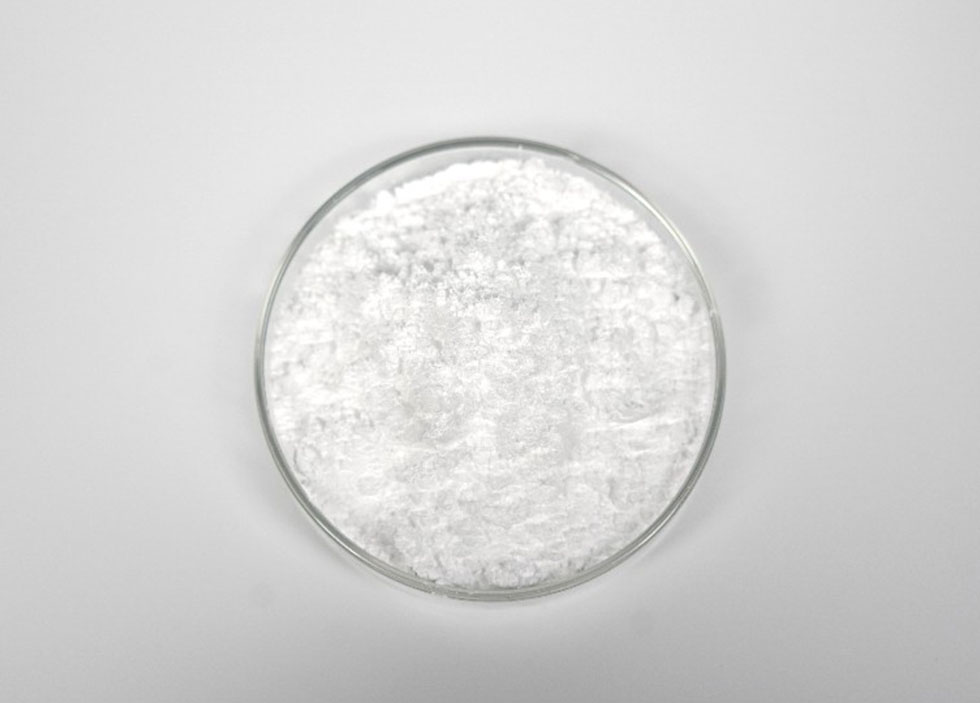
Check 2: Is Particle Size Stated for Every Grade?
Particle size decides whether an additive can go into a fine fiber or only a molded part. Ask for both D50 and D98: the D98 shows how large the biggest particles are, which is what breaks filaments and clogs spinnerets. AntibacMax® fiber grades keep a D98 of 1.0 ± 0.2 µm.
| AntibacMax® grade | D50 | D98 | Typical use |
|---|---|---|---|
| P203 / P205 / P210 silver | 0.6 ± 0.2 µm | 1.0 ± 0.2 µm | Fiber, film, coating |
| B201 zinc / B401 copper | 0.4 ± 0.2 µm | 5 ± 2 µm | Plastic, rubber, paint |
| B110 silver / BP110 | 3.5 ± 1 µm | 9 ± 2 µm | Plastic, rubber, paint, film |
| B130 silver / B430 copper | 11 ± 3 µm | 50–52 µm | Plastic, rubber, paint, film |
Check 3: Does Heat Resistance Cover Your Process?
An inorganic antimicrobial must survive compounding, spinning or molding without losing activity or changing color. Ask for the listed heat resistance and compare it with your highest process temperature. AntibacMax® glass grades are listed to 600 °C and zirconium phosphate grades to 1300 °C.
Both figures sit well above typical polymer processing temperatures, so the practical question is usually color stability. Langyi lists its zinc, copper and composite powders and its silver, zinc and copper masterbatches as resisting discoloration during processing; include a color measurement in your trial if the part must stay white or clear.
Check 4: Powder, Masterbatch or Liquid?
Most fiber and plastics producers dose a masterbatch rather than handle fine powder. A manufacturer that makes its own masterbatches controls dispersion from carrier to pellet. AntibacMax® masterbatches carry 20 ± 0.5% additive in PP, PET, PA, ABS, PE or TPU, with the carrier resin customizable.
- Silver masterbatch: MP series on PP, PET or PA for fiber, nonwoven and film; MB series for molded plastics.
- Zinc masterbatch and copper masterbatch: glass-carrier actives in PP, PET, ABS, PE or TPU.
- MP210-PP25R: 25 ± 0.5% silver additive in a high-flow PP (MFI 1500 ± 200 g/10 min) for melt-blown nonwovens.
- L1003: silver ion finishing solution, 800–1200 ppm, for polyester, nylon and blended textiles.
Check 5: How Was the Test Data Produced?
An antibacterial rate means little without its method, organisms and conditions. Ask which standard was used, which strains were tested, on what material and after what treatment, such as washing. Langyi's silver powder sheet, for example, reports a fabric test under FZ/T 73023-2006 after 50 washes, with rates above 99% for E. coli and S. aureus.
Data from a supplier's own sample tells you the additive can work; it does not prove your product will. Plan a test on your finished article, by the method your customer accepts, at the loading you intend to use. For the melt-blown grade MP210-PP25R, Langyi lists an E. coli antibacterial rate of at least 99% as manufacturer data; ask for the test report behind any figure you plan to rely on.
Check 6: Production Sites and Claims Rules
Ask where the additive is made and confirm the site exists. Langyi develops AntibacMax® in Songjiang, Shanghai and produces it at its Yantai base in Shandong, in operation since 2020. A factory visit or video audit before a large order is normal in China sourcing.
Antimicrobial claims on finished products are regulated in many markets, and the rules often cover both the additive and the treated article. Find out what applies where you sell before you print a claim, and ask the supplier which documents it can provide for the grade you choose.
Questions to Send With Your RFQ
- Do you make the ion-loaded carrier yourselves? At which site?
- Which metal ion and carrier does this grade use?
- What are the D50, D98 and heat resistance of this grade?
- Is a masterbatch available in my carrier resin, and at what active content?
- Which test method, strains and conditions are behind your antibacterial data?
- Does the additive change the color of a white or clear part?
- Can you send the TDS and SDS, and a certificate of analysis with each batch?
- Which documents can you provide for my market?
Frequently Asked Questions
Is Langyi a manufacturer or a trading company?
Langyi is a manufacturer. It develops AntibacMax® additives in Shanghai and produces them at its Yantai base in Shandong Province.
Which antimicrobial additive grades suit fibers?
The AntibacMax® silver zirconium phosphate grades P203, P205 and P210 have a D50 of 0.6 µm and a D98 of 1.0 µm. Matching MP-series masterbatches use PP, PET or PA carriers.
What active content do AntibacMax® masterbatches have?
The silver, zinc and copper masterbatches contain 20 ± 0.5% antimicrobial additive. MP210-PP25R for melt-blown PP contains 25 ± 0.5%.
Can I put an antimicrobial claim on my product?
That depends on the rules in your market, which often cover the treated article as well as the additive. Check them before making a claim.
Conclusion
A good antimicrobial additive manufacturer offers a choice of metals and carriers, states particle size and heat resistance per grade, makes its own masterbatches, explains how its test data was produced and has sites you can verify. Use the checklist and RFQ questions above to compare suppliers, and send your requirements to see how AntibacMax® fits.
Request a Data Sheet or Sample
Tell us your polymer or resin system, your process and the property you need to improve. Our technical team replies with a grade recommendation, the technical data sheet and sample availability.
Related Guides
- Monomeric vs Polymeric Carbodiimide Hydrolysis Stabilizers
- Silver vs Zinc vs Copper Antimicrobial Additives
- Polycarbodiimide vs Blocked Isocyanate Crosslinkers
- Cesium Tungsten Oxide: Powder vs Dispersion vs Masterbatch
- How to Choose an Ion Scavenger for Epoxy Molding Compounds
- How to Choose a Carbodiimide Anti-Hydrolysis Agent Supplier in China
- Polymer Additive Manufacturer vs Trading Company in China
- Chain Extender Powder vs Masterbatch for Recycled PET and PLA
- Conductive vs Ionic Antistatic Agents for Plastics and TPU
- Acidic vs Alkaline Odor Absorbers for Plastics
- Zirconium Phosphate Flame Retardant Synergist
- How to Choose a Cesium Tungsten Oxide Supplier in China
- How to Choose an Inorganic Ion Scavenger Supplier
- All technical guides