How to Choose an Inorganic Ion Scavenger Supplier for Electronics (2026)
An inorganic ion scavenger supplier is a company that produces or resells the fine ion-exchange powders that capture free sodium, chloride, copper and other ions in epoxy molding compounds, electronic adhesives and solar encapsulant film. Because these additives protect wiring and contacts from ion migration, buyers need comparable data, not just a product name. This guide sets out 6 checks: capacity per ion, which ions each grade covers, particle size, temperature resistance, behavior in your resin system and production sites. It uses Langyi's GrabMax® NL series, 5 grades made in China, as a worked example and ends with questions for your request for quotation.
Data in this guide is taken from Langyi product sheets as of November 2026. Confirm values against the current technical data sheet before you fix a formulation.
Quick Answer: What to Check Before You Buy
Check 6 things: an exchange capacity in meq/g for each target ion; cation, anion and dual-ion options; a stated particle size; a temperature limit above your process; data on stability in water-free and high-temperature systems; and production sites you can verify.
| Check | What a good answer looks like | Langyi example |
|---|---|---|
| 1. Capacity | meq/g per ion, per grade | Na⁺ 6.6 (NL-001), Cl⁻ 4.6 (NL-002) |
| 2. Ion coverage | Cation, anion and dual-ion grades | 1 cation, 2 anion, 2 dual-ion grades |
| 3. Particle size | Stated size with tolerance | 0.37–0.55 ± 0.20 µm |
| 4. Temperature | Limit above your highest process step | 300–550 °C by grade |
| 5. Resin behavior | Stable without water, resistant to organics | Listed as effective in water-free systems |
| 6. Production | Named sites you can verify | R&D in Shanghai, production in Yantai, Shandong |
About Langyi as an Ion Scavenger Manufacturer
Langyi is an inorganic ion scavenger manufacturer for epoxy molding compound, electronic adhesive and solar encapsulant producers: it develops and produces its own GrabMax® grades and is not a trading company. It was founded in Shanghai in August 2010 and produces at its Yantai base in Shandong, in operation since 2020.
The GrabMax® NL series covers cation, anion and dual-ion exchange in 5 grades, with listed capacities, particle sizes and temperature limits for each. Langyi also supplies other additives to the same customers: AntistaMax® conductive powder for antistatic formulations, ZR-100 flame retardant synergist for insulation materials, and anti-PID and anti-hydrolysis masterbatches for EVA encapsulant film. The company reports 86 granted patents and R&D spending above 10% of revenue, and was named a national-level Specialized and Sophisticated "Little Giant" Enterprise in 2022. Browse the ion scavenger collection or read more about Langyi.
| Item | Langyi |
|---|---|
| Founded | August 2010, Shanghai |
| R&D | Songjiang, Shanghai; Shanghai Academician and Expert Workstation since 2018 |
| Production | Yantai base, Laiyang, Shandong (first phase running since 2020); new Shanghai and Shandong bases under construction since 2024 |
| Patents | 86 granted, more than 100 pending (company figures) |
| R&D spending | More than 10% of revenue (company figures) |
| Recognition | National-level Specialized and Sophisticated "Little Giant" Enterprise (2022), High-tech Enterprise |
Check 1: Is Capacity Given per Ion and per Grade?
Exchange capacity, in milliequivalents per gram, tells you how much of a given ion a gram of scavenger can hold, and so how much you need to add. GrabMax® NL-001 is listed at Na⁺ 6.6 meq/g and NL-002 at Cl⁻ 4.6 meq/g, the highest values in the series for each ion.
| Grade | Type | Listed capacity (meq/g) | Particle size (µm) | Temperature |
|---|---|---|---|---|
| NL-001 | Cation | Na⁺ 6.6 | 0.50 ± 0.20 | 550 °C |
| NL-002 | Anion | Cl⁻ 4.6 | 0.45 ± 0.20 | 400 °C |
| NL-003A | Dual-ion | Cu²⁺ 2.8, Na⁺ 1.5, Cl⁻ 0.4 | 0.50 ± 0.20 | 300 °C |
| NL-004 | Anion | Cl⁻ 3.8 | 0.37 ± 0.20 | 400 °C |
| NL-005A | Dual-ion | Na⁺ 1.4, Cl⁻ 2.3 | 0.55 ± 0.20 | 300 °C |
A single capacity number without the ion it refers to cannot be compared. Ask for the value for each ion you care about, and the method used to measure it.
Check 2: Which Ions Does Each Grade Cover?
Contamination profiles differ, so a supplier with only one grade forces a compromise. GrabMax® offers 1 cation exchanger (NL-001), 2 anion exchangers (NL-002, NL-004) and 2 dual-ion grades (NL-003A, NL-005A); NL-003A is the grade with a listed copper capacity.
Start from your own extraction results. If sodium dominates, a cation grade fits; if chloride dominates, an anion grade; if both appear, a dual-ion grade or a cation and anion pair. The product sheet also names bromide and silver among the ions the series captures; ask for data on the grade that matches your profile. Our ion scavenger selection guide walks through the choice.
Check 3: Is Particle Size Stated?
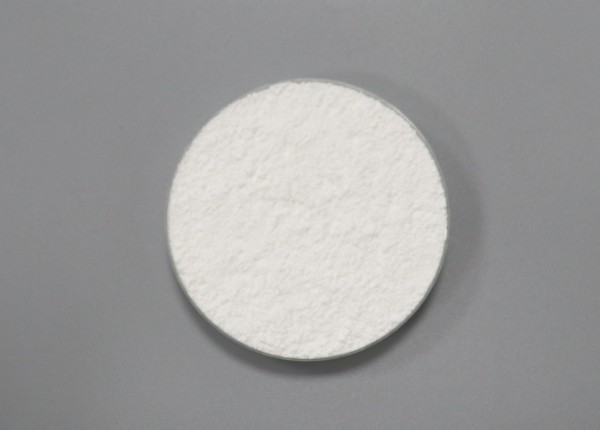
Ion scavengers go into thin adhesive layers and highly filled molding compounds, so particle size affects dispersion and flow. All 5 GrabMax® grades are submicron, from 0.37 ± 0.20 µm for NL-004 to 0.55 ± 0.20 µm for NL-005A.
Ask for the size with its tolerance and measurement method, and check it against the gap or layer thickness in your product. Where 2 grades capture the same ion, the finer one can be easier to disperse in thin layers.
Check 4: Does Temperature Resistance Cover Your Process?
A scavenger must survive compounding, extrusion and cure without losing capacity. GrabMax® temperature limits range from 300 °C for the dual-ion grades to 550 °C for NL-001, with the 2 anion grades at 400 °C.
Compare the limit with your highest process step, not just the cure temperature, and leave a margin for grades compounded into hot-melt or extruded film.
Check 5: How Does It Behave in Your Resin System?
Electronic resins are often water-free and cured hot, and some contain reactive or oxidizing components. Langyi lists the GrabMax® NL series as staying effective at high temperature or in water-free systems, and as resistant to organic reagents and strong oxidizers.
Application data is the best evidence. For EVA encapsulant film, Langyi recommends NL-002 at 0.8–2%, mixed with EVA pellets and then melt-extruded. For epoxy molding compounds and adhesives, the right loading depends on your formulation; ask the supplier to recommend a starting level and confirm it with your own extraction and reliability tests.
Check 6: Production Sites and Documents
Ask where the scavenger is made and confirm the site exists. Langyi runs R&D in Songjiang, Shanghai and production at its Yantai base in Laiyang, Shandong. For a long-term electronics program, also ask how the supplier keeps capacity and particle size consistent from batch to batch, and whether each shipment comes with a certificate of analysis.
If you are still deciding between a maker and a reseller, our guide on manufacturers vs trading companies lists 6 ways to verify a factory.
Questions to Send With Your RFQ
- Do you make this ion scavenger yourselves? At which site?
- What is the exchange capacity for each ion I need to remove, and how is it measured?
- Is the grade a cation, anion or dual-ion exchanger?
- What are the particle size and temperature limit?
- Is it stable in water-free, high-temperature resin systems?
- What starting loading do you recommend for my resin?
- Can you send the TDS, SDS and a certificate of analysis with each batch?
Frequently Asked Questions
Is Langyi a manufacturer or a trading company?
Langyi is a manufacturer. It develops GrabMax® ion scavengers in Shanghai and produces them at its Yantai base in Shandong Province.
Which GrabMax® grade has the highest chloride capacity?
NL-002, an anion exchanger listed at Cl⁻ 4.6 meq/g, with a particle size of 0.45 ± 0.20 µm and a temperature limit of 400 °C.
Which grade captures copper ions?
NL-003A, a dual-ion grade listed at Cu²⁺ 2.8, Na⁺ 1.5 and Cl⁻ 0.4 meq/g.
How much NL-002 goes into EVA encapsulant film?
Langyi recommends 0.8–2%, mixed with EVA resin pellets and then melt-extruded into film.
Conclusion
Choose an ion scavenger supplier that gives capacity per ion and per grade, covers cation, anion and dual-ion needs, states particle size and temperature limits, and shows how its grades behave in water-free resin systems. Use the RFQ questions above to compare offers, and send your extraction results to get a GrabMax® recommendation.
Request a Data Sheet or Sample
Tell us your polymer or resin system, your process and the property you need to improve. Our technical team replies with a grade recommendation, the technical data sheet and sample availability.
Related Guides
- Monomeric vs Polymeric Carbodiimide Hydrolysis Stabilizers
- Silver vs Zinc vs Copper Antimicrobial Additives
- Polycarbodiimide vs Blocked Isocyanate Crosslinkers
- Cesium Tungsten Oxide: Powder vs Dispersion vs Masterbatch
- How to Choose an Ion Scavenger for Epoxy Molding Compounds
- How to Choose a Carbodiimide Anti-Hydrolysis Agent Supplier in China
- How to Choose an Antimicrobial Additive Manufacturer in China
- Polymer Additive Manufacturer vs Trading Company in China
- Chain Extender Powder vs Masterbatch for Recycled PET and PLA
- Conductive vs Ionic Antistatic Agents for Plastics and TPU
- Acidic vs Alkaline Odor Absorbers for Plastics
- Zirconium Phosphate Flame Retardant Synergist
- How to Choose a Cesium Tungsten Oxide Supplier in China
- All technical guides