How to Choose a Cesium Tungsten Oxide Supplier in China (2026)
A cesium tungsten oxide supplier is a company that produces or resells the blue-black nanomaterial that absorbs near-infrared light while letting visible light through, used in heat-insulating window film, PC sheet, greenhouse film and transparent coatings. Because the performance of a clear film depends on nano particle size and dispersion quality, the supplier matters as much as the chemistry. This guide gives buyers 6 checks: particle size data, active content, infrared figures with their test conditions, the forms on offer, dispersion stability and production sites. It uses Langyi's AntibariMax® range, made in China as powder, solvent dispersion and masterbatch, as a worked example and ends with questions for your request for quotation.
Data in this guide is taken from Langyi product sheets as of November 2026. Confirm values against the current technical data sheet before you fix a formulation.
Quick Answer: What to Check Before You Buy
Check 6 things: a stated particle size and specific surface area; an active content figure; infrared and visible transmission data with the test conditions behind it; powder, dispersion and masterbatch forms; storage stability for dispersions; and production sites you can verify.
| Check | What a good answer looks like | Langyi example |
|---|---|---|
| 1. Particle size | Initial size, D50 and surface area stated | LNT 30–50 nm, 50–80 m²/g; JLNT D50 ≤ 50 nm |
| 2. Active content | A minimum value per grade | LNT ≥ 99.9%; JLNT 25–35%; MLNT 5–20% |
| 3. Optical data | NIR and visible figures with loading and thickness | NIR absorption up to 95%, VLT > 75% reported; conditions on the TDS |
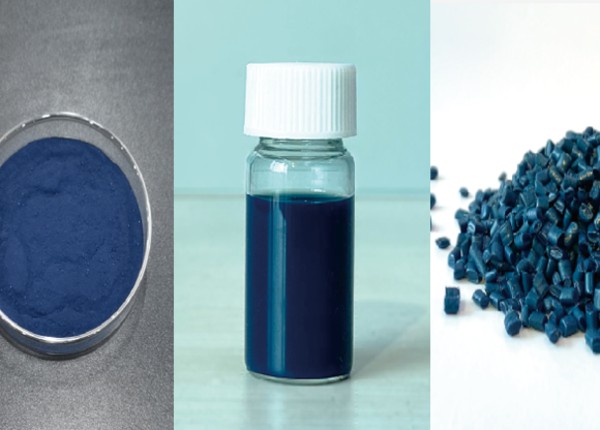
| 4. Forms | Powder, dispersion and masterbatch | LNT, JLNT (2 grades), MLNT (4 carriers) |
| 5. Stability | Dispersion stays stable without settling | JLNT listed as stable in long-term storage |
| 6. Production | Named sites you can verify | R&D in Shanghai, production in Yantai, Shandong |
About Langyi as a Cesium Tungsten Oxide Manufacturer
Langyi is a cesium tungsten oxide manufacturer for window film coaters, sheet extruders and masterbatch producers: it develops and produces its own AntibariMax® infrared blocking grades and is not a trading company. It was founded in Shanghai in August 2010 and produces at its Yantai base in Shandong, in operation since 2020.
The AntibariMax® line carries one nanomaterial through 3 stages: LNT nano powder, JLNT solvent dispersion in 2 grades and MLNT masterbatch on PET, TPU, PC or PMMA carriers. Langyi reports 86 granted patents, more than 100 pending applications and R&D spending above 10% of revenue, with research partners including Tsinghua, Fudan and Donghua universities, and was named a national-level Specialized and Sophisticated "Little Giant" Enterprise in 2022. Its other brands cover hydrolysis stabilizers for PET film and anti-hydrolysis masterbatches, so a window film producer can source infrared blocking and polyester protection from one supplier. Browse the infrared blocking collection or read more about Langyi.
| Item | Langyi |
|---|---|
| Founded | August 2010, Shanghai |
| R&D | Songjiang, Shanghai; Shanghai Academician and Expert Workstation since 2018 |
| Production | Yantai base, Laiyang, Shandong (first phase running since 2020); new Shanghai and Shandong bases under construction since 2024 |
| Patents | 86 granted, more than 100 pending (company figures) |
| R&D spending | More than 10% of revenue (company figures) |
| Recognition | National-level Specialized and Sophisticated "Little Giant" Enterprise (2022), High-tech Enterprise |
Check 1: Is Particle Size Stated and Measured?
Visible clarity depends on keeping particles at nano scale, so particle size is the first number to ask for. AntibariMax® LNT is listed with a 30–50 nm initial particle size and a specific surface area of 50–80 m²/g, and the JLNT dispersion with a D50 of 50 nm or less.
Ask how each figure was measured. Initial (primary) particle size describes the powder as made; the D50 of a dispersion describes what actually reaches your coating. A supplier that states both, and the method behind them, gives you something to compare against your own haze measurements.
Check 2: What Is the Active Content?
Active content decides how much product you add and how much you pay per unit of infrared blocking. AntibariMax® LNT powder is listed at no less than 99.9% active content, the JLNT dispersion at 25–35% typical effective content (5–50% solids can be made) and the MLNT masterbatch at 5–20%.
When you compare quotations, convert each offer to price per kilogram of active material. A low price for a dilute dispersion can cost more per square meter of film than a concentrated one.
Check 3: Are Optical Figures Given With Test Conditions?
Infrared and visible transmission figures only mean something with the loading, film thickness and measurement method behind them. For AntibariMax® LNT, Langyi reports near-infrared absorption of up to 95% with visible light transmission above 75%, and gives the test conditions on the technical data sheet.
Ask every supplier for the same thing: the loading, coating or film thickness, substrate and instrument used. Then reproduce the test on your own line. Your target is usually a balance of infrared blocking, visible transmission and haze, so ask for all 3 on the same sample.
Check 4: Which Forms Are Offered?
Coaters, extruders and in-house formulators need different forms. A supplier that makes all 3 lets you switch without requalifying a new nanomaterial. Langyi supplies AntibariMax® as powder, as a solvent dispersion and as a masterbatch.
- LNT nano powder: for companies that make their own dispersions, coatings or masterbatches; disperses in water and organic solvents; 25 kg bags or paper drums.
- JLNT dispersion: JLNT-TD and JLNT-EA in toluene or ethyl acetate, other solvents customizable; 5 kg or 25 kg drums.
- MLNT masterbatch: PET, TPU, PC or PMMA carriers, other carriers customizable; for extrusion and molding.
Our powder vs dispersion vs masterbatch guide explains which form suits which process.
Check 5: Does the Dispersion Stay Stable?
A nano dispersion that settles or agglomerates in the drum turns into haze in the film. Ask for storage stability data and the recommended shelf life. Langyi lists the AntibariMax® JLNT dispersion as stable in long-term storage without settling, and advises storing all forms in a cool, dark and dry place.
For the first deliveries, check particle size or haze on arrival and again after the storage time you expect on your site. That tells you more than any datasheet claim.
Check 6: Production Sites and Documents
Ask where the nanomaterial and the dispersion are made, and confirm the sites exist. Langyi runs R&D in Songjiang, Shanghai and production at its Yantai base in Laiyang, Shandong, with new Shanghai and Shandong bases under construction since 2024.
Solvent dispersions are regulated for transport and storage, so ask early for the safety data sheet and transport classification of the exact grade, along with any documents your market requires. If you are still deciding between a maker and a reseller, see our guide on manufacturers vs trading companies.
Questions to Send With Your RFQ
- Do you make the cesium tungsten oxide yourselves? At which site?
- What are the initial particle size, D50 and specific surface area, and how are they measured?
- What is the active content of the powder, dispersion or masterbatch?
- What infrared blocking, visible transmission and haze do you measure, at what loading and thickness?
- Which solvents or carrier resins are available, and can you customize them?
- How long does the dispersion stay stable, and how should it be stored?
- Can you send the TDS, SDS and a certificate of analysis with each batch?
Frequently Asked Questions
Is Langyi a manufacturer or a trading company?
Langyi is a manufacturer. It develops AntibariMax® infrared blocking materials in Shanghai and produces them at its Yantai base in Shandong Province.
What particle size does AntibariMax® cesium tungsten oxide have?
LNT powder has an initial particle size of 30–50 nm and a specific surface area of 50–80 m²/g. The JLNT dispersion has a D50 of 50 nm or less.
What infrared performance is reported?
Langyi reports near-infrared absorption of up to 95% with visible light transmission above 75% for LNT. The test conditions are given on the technical data sheet.
Which solvents are available for the dispersion?
Standard JLNT grades use ethyl acetate or toluene. Other solvent systems can be customized.
Conclusion
Choose a cesium tungsten oxide supplier on data: particle size and how it is measured, active content, optical figures with their test conditions, the forms you need and dispersion stability, backed by production sites you can verify. Use the RFQ questions above to compare offers, and send your requirements to test AntibariMax® on your line.
Request a Data Sheet or Sample
Tell us your polymer or resin system, your process and the property you need to improve. Our technical team replies with a grade recommendation, the technical data sheet and sample availability.
Related Guides
- Monomeric vs Polymeric Carbodiimide Hydrolysis Stabilizers
- Silver vs Zinc vs Copper Antimicrobial Additives
- Polycarbodiimide vs Blocked Isocyanate Crosslinkers
- Cesium Tungsten Oxide: Powder vs Dispersion vs Masterbatch
- How to Choose an Ion Scavenger for Epoxy Molding Compounds
- How to Choose a Carbodiimide Anti-Hydrolysis Agent Supplier in China
- How to Choose an Antimicrobial Additive Manufacturer in China
- Polymer Additive Manufacturer vs Trading Company in China
- Chain Extender Powder vs Masterbatch for Recycled PET and PLA
- Conductive vs Ionic Antistatic Agents for Plastics and TPU
- Acidic vs Alkaline Odor Absorbers for Plastics
- Zirconium Phosphate Flame Retardant Synergist
- How to Choose an Inorganic Ion Scavenger Supplier
- All technical guides