
Chain Extender Powder vs Masterbatch for Recycled PET, PLA and PBAT (2026)
A chain extender is a reactive additive that links polymer chains together during melt processing, raising the molecular weight, intrinsic viscosity and melt strength of polyesters that have degraded through recycling, drying or hydrolysis. Langyi offers it in 2 forms: HyMax® KL-180, an acrylic epoxy polymer powder with an epoxy functionality of 8–10 for PET, PLA, PBAT, PBT, TPU and PETG, and HyMax® M180, a PET chain extender masterbatch in white pellets. This guide explains how epoxy chain extension works, compares the 2 grades and shows which one fits compounding, recycled PET, PLA/PBAT blends and PET film, fiber and monofilament lines.
Data in this guide is taken from Langyi product sheets as of November 2026. Confirm values against the current technical data sheet before you fix a formulation.
Quick Answer: Powder or Masterbatch?
Choose HyMax® KL-180 powder when you compound PLA, PBAT, PBT, TPU, PETG or blends and want one grade across several polymers. Choose HyMax® M180 masterbatch when you run PET extrusion, monofilament, film or fiber and want to dose pellets at the hopper.
| HyMax® KL-180 | HyMax® M180 | |
|---|---|---|
| Form | White powder | White pellets |
| Chemistry | Acrylic epoxy polymer, functionality 8–10 | PET chain extender masterbatch |
| Listed polymers | PLA, PBAT, PET, PBT, TPU, PETG | PET, including recycled PET |
| Listed uses | Recycled PET, PLA/PBAT blends, PET, PBT, TPU and PETG processing | PET monofilament, specialty film, engineering plastics, fiber, recycled PET |
| Packaging | Confirmed on quotation | 25 kg kraft paper bag; shelf life at least 1 year sealed |
How an Epoxy Chain Extender Works
Polyesters such as PET, PLA and PBAT end in hydroxyl and carboxyl groups. At melt-extrusion temperatures the epoxy groups of HyMax® KL-180 react with those end groups, so one chain extender molecule with 8–10 epoxy groups can join several polymer chains and rebuild the molecular weight lost in processing.
Higher molecular weight shows up as higher intrinsic viscosity and melt strength. That is what recycled PET needs to run on a film or sheet line again, and what PLA and PBAT need to hold a bubble in film blowing or a parison in blow molding. Langyi also lists better flowability and dispersion during processing and improved compatibility in PLA/PBAT blends for KL-180.
About Langyi and HyMax® Chain Extenders
Langyi is a Chinese developer and manufacturer of functional polymer additives, founded in Shanghai in August 2010, with R&D in Songjiang, Shanghai and production at its Yantai base in Shandong Province, in operation since 2020. Its HyMax® brand started with carbodiimide hydrolysis stabilizers, in stable mass production since 2012, and grew to cover the other ways polyesters lose molecular weight.
The 2 chain extenders sit beside 4 carbodiimide stabilizers and 6 anti-hydrolysis masterbatches, so a recycled PET or PLA producer can rebuild molecular weight with a chain extender and protect it against later hydrolysis with a stabilizer from the same supplier. Langyi reports 86 granted patents and R&D spending above 10% of revenue. See both grades in the chain extender collection or read more about Langyi.
HyMax® KL-180: Multifunctional Epoxy Powder
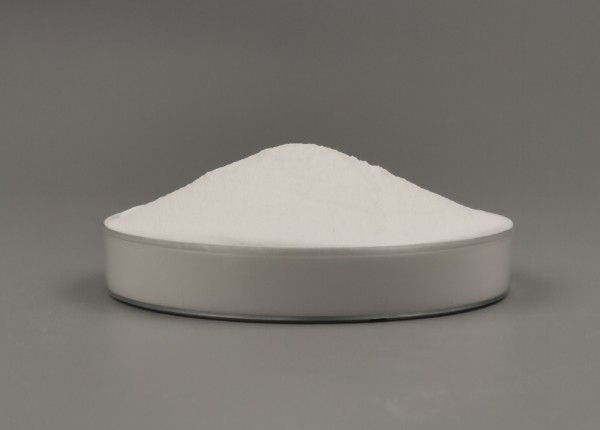
HyMax® KL-180 is an acrylic epoxy polymer supplied as a white powder, with 8–10 epoxy groups per molecule. Langyi recommends it for PLA, PBAT, PET, PBT, TPU and PETG, and lists recycled PET, PLA/PBAT blends for packaging and biodegradable products, and automotive, electronics, construction, coating and adhesive uses.
A powder suits compounders who already feed additives by gravimetric feeder and who work with several polymers. Because KL-180 carries 8–10 epoxy groups per molecule, small changes in loading can have a visible effect on melt viscosity, so start low and step up in a trial. The right level depends on your polymer, its starting molecular weight and your process, and Langyi recommends a starting level for each trial.
HyMax® M180: PET Chain Extender Masterbatch
HyMax® M180 is a chain extender masterbatch for PET in white pellets, packed in 25 kg kraft paper bags and listed with a shelf life of at least 1 year in the original sealed packaging. It raises the molecular weight of PET for extrusion, blow molding and blister forming.
Langyi lists 5 effects for M180: a marked increase in melt strength, help against hydrolysis and property loss during production, shorter injection cycles and lower injection pressure, better compatibility between fillers and thermoplastics, and improved transparency and mechanical properties of finished parts. Its listed applications are industrial PET monofilament, specialty PET film, PET engineering plastics, PET fiber and recycled PET.
Chain Extender or Hydrolysis Stabilizer?
A chain extender rebuilds molecular weight that has already been lost; a carbodiimide hydrolysis stabilizer slows further loss by reacting with the carboxylic acid groups that drive hydrolysis. Many recycled PET and PLA formulations need both: one to restore viscosity at the extruder, the other to keep it in hot, humid service.
If your problem is low melt strength or intrinsic viscosity at the extruder, start with a chain extender. If parts lose strength after months in heat and humidity, look at a stabilizer; our monomeric vs polymeric carbodiimide guide explains the options, including masterbatches for PET and PLA.
What to Send for a Trial
- Polymer and grade, and whether it is virgin, recycled or a blend (for example PLA/PBAT).
- Current intrinsic viscosity or melt flow, and the value you need.
- Process: compounding, sheet, film, fiber, monofilament or blow molding.
- How you feed additives today: powder feeder or pellet dosing.
Frequently Asked Questions
What is the epoxy functionality of HyMax® KL-180?
KL-180 is an acrylic epoxy polymer with an epoxy functionality of 8–10, supplied as a white powder.
Can a chain extender be used in recycled PET?
Yes. Both KL-180 and M180 list recycled PET. The chain extender rebuilds molecular weight lost during recycling.
How is HyMax® M180 packed?
In 25 kg kraft paper bags. Kept in the original sealed packaging, it is listed with a shelf life of at least 1 year.
Which grade suits PLA/PBAT blends?
HyMax® KL-180, which is listed for PLA and PBAT and for improving compatibility in PLA/PBAT blends.
Conclusion
Use HyMax® KL-180 powder when you compound several polyesters or PLA/PBAT blends, and HyMax® M180 masterbatch when you run PET lines and prefer pellet dosing. Pair either with a carbodiimide stabilizer if the finished part must also resist hydrolysis.
Request a Data Sheet or Sample
Tell us your polymer or resin system, your process and the property you need to improve. Our technical team replies with a grade recommendation, the technical data sheet and sample availability.
Related Guides
- Monomeric vs Polymeric Carbodiimide Hydrolysis Stabilizers
- Silver vs Zinc vs Copper Antimicrobial Additives
- Polycarbodiimide vs Blocked Isocyanate Crosslinkers
- Cesium Tungsten Oxide: Powder vs Dispersion vs Masterbatch
- How to Choose an Ion Scavenger for Epoxy Molding Compounds
- How to Choose a Carbodiimide Anti-Hydrolysis Agent Supplier in China
- How to Choose an Antimicrobial Additive Manufacturer in China
- Polymer Additive Manufacturer vs Trading Company in China
- Conductive vs Ionic Antistatic Agents for Plastics and TPU
- Acidic vs Alkaline Odor Absorbers for Plastics
- Zirconium Phosphate Flame Retardant Synergist
- How to Choose a Cesium Tungsten Oxide Supplier in China
- How to Choose an Inorganic Ion Scavenger Supplier
- All technical guides