Cesium Tungsten Oxide IR Blockers: Powder vs Dispersion vs Masterbatch (2026)
Cesium tungsten oxide is a blue-black inorganic nanomaterial that absorbs near-infrared light, the part of sunlight that carries much of its heat, while letting visible light through. That makes it a common choice for transparent heat-insulating films, sheets and coatings. Langyi sells it under the AntibariMax® name in 3 forms: LNT nano powder with at least 99.9% active content, JLNT solvent dispersion with a D50 of 50 nm or less, and MLNT masterbatch with 5–20% effective content. The chemistry is the same in all 3; the right form depends on your process, whether you coat, extrude or make your own dispersions. This guide compares the 3 forms and maps them to window film, PC sheet and greenhouse film production.
Data in this guide is taken from Langyi product sheets as of November 2026. Confirm values against the current technical data sheet before you fix a formulation.
Quick Answer: Which Form Fits Your Process?
Coaters who apply a layer to film or glass should start with AntibariMax® JLNT dispersion in ethyl acetate or toluene. Extruders and molders of PET, PC, PMMA or TPU should use MLNT masterbatch. Companies that make their own dispersions, coatings or masterbatches can buy LNT powder, which disperses in water and organic solvents.
| Your process | AntibariMax® form | Key data |
|---|---|---|
| Coating window film, glass or sheet | JLNT dispersion (JLNT-TD, JLNT-EA) | D50 ≤ 50 nm; 25–35% active; ethyl acetate or toluene |
| Extruding or molding transparent PET, PC, PMMA, TPU | MLNT masterbatch | 5–20% effective content; PET, TPU, PC or PMMA carrier |
| Making your own dispersion, coating or masterbatch | LNT nano powder | ≥ 99.9% active; 30–50 nm; 50–80 m²/g |
How Near-Infrared Blocking Works
AntibariMax® cesium tungsten oxide nanoparticles, with an initial particle size of 30–50 nm, absorb near-infrared radiation while transmitting most visible light. A film or sheet loaded with them stays clear to the eye but lets less solar heat through, which is the basis of heat-insulating window film.
Particle size and dispersion quality matter because visible clarity depends on keeping the particles at nano scale in the final layer. That is why Langyi supplies the material pre-dispersed in a solvent (JLNT) and pre-compounded in a polymer (MLNT), as well as in powder form for experienced dispersers. The LNT sheet lists good weather resistance thanks to its stable inorganic structure.
About Langyi and the AntibariMax® Range
Langyi is a developer and manufacturer of functional additives, founded in Shanghai in August 2010, with R&D in Songjiang, Shanghai and production at its base in Laiyang, Yantai, Shandong Province, in operation since 2020. AntibariMax® is its infrared blocking brand, built around nano cesium tungsten oxide.
The AntibariMax® line has 3 products that carry the same nanomaterial through 3 stages of the value chain: the LNT powder, the JLNT dispersion in 2 grades and the MLNT masterbatch on 4 standard carriers. Langyi reports 86 granted patents, more than 100 pending applications and R&D spending above 10% of revenue, and works with Tsinghua, Fudan and Donghua universities. For a window film or sheet producer this means you can start with the form that suits your current line and move to another form later without changing supplier or chemistry. Browse all grades in the infrared blocking agent collection or read more about Langyi.
The Three Forms Compared
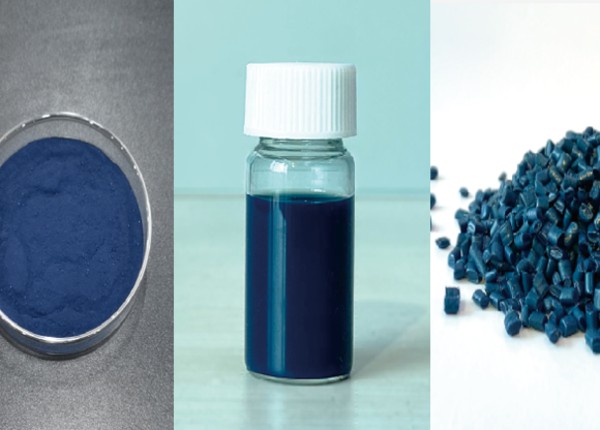
The 3 AntibariMax® forms share a blue-black color and nano particle size but differ in active content, carrier and packaging. LNT is at least 99.9% active, JLNT typically 25–35%, and MLNT 5–20%, so the loading you add to your formulation scales accordingly.
| Property | LNT powder | JLNT dispersion | MLNT masterbatch |
|---|---|---|---|
| Appearance | Blue-black powder | Blue-black slurry | Blue-black granules |
| Active / effective content | ≥ 99.9% | 25–35% typical (5–50% solids possible) | 5–20% (customizable) |
| Particle size | 30–50 nm initial | D50 ≤ 50 nm | Nano agent in polymer |
| Carrier or solvent | — | Ethyl acetate or toluene (customizable) | PET, TPU, PC or PMMA (customizable) |
| Other data | Specific surface area 50–80 m²/g | Stable in long-term storage without settling | Designed to fit existing processing lines |
| Packaging | 25 kg net, aluminum-plastic bags or paper drums | 5 kg or 25 kg plastic or metal drums | Confirmed on quotation |
LNT Powder: When to Buy the Raw Nanomaterial
AntibariMax® LNT is the base nanomaterial: a blue-black powder with at least 99.9% active content, 30–50 nm initial particle size and a specific surface area of 50–80 m²/g. Langyi lists it as dispersible in both water and organic solvents, and packs it in 25 kg aluminum-plastic bags or paper drums.
LNT fits companies that already run bead mills or masterbatch lines and want to control their own dispersion recipe, solvent and loading. It is also the right form for water-based systems, since the standard JLNT grades use ethyl acetate or toluene. Store it in a cool, dark and dry place.
JLNT Dispersion: For Coaters
AntibariMax® JLNT is a solvent dispersion with a D50 of 50 nm or less and a typical active content of 25–35%. Solid content from 5% to 50% can be made, and the standard solvents are ethyl acetate (JLNT-EA) and toluene (JLNT-TD), with other systems available on request.
A ready dispersion saves coaters the milling step and is listed as stable in long-term storage without settling. Langyi names 4 applications: architectural glass films, automotive window films, greenhouse films and transparent infrared-shielding coatings. It is packed in 5 kg or 25 kg plastic or metal drums.
MLNT Masterbatch: For Extruders and Molders
AntibariMax® MLNT carries the nano infrared blocking agent in a polymer carrier at 5–20% effective content. Standard carriers are PET, TPU, PC and PMMA, and other carriers can be customized. Langyi lists it for good transparency with a high infrared blocking rate.
MLNT lets a film or sheet producer add infrared blocking with the base resin, so no solvent handling or coating step is needed. Listed uses include architectural glass films, automotive window films, greenhouse films, PC sheets and other transparent PET, TPU, PC and PMMA products.
Applications by Market
Across the 3 forms, Langyi lists 5 main end uses: architectural glass film, automotive window film, greenhouse film, PC sheet, and heat-insulating PET and PE films and packaging. The table shows which form is usually the starting point for each.
| End use | Usual starting form | More information |
|---|---|---|
| Architectural glass film | JLNT (coated) or MLNT (extruded) | Building & Glazing |
| Automotive window film | JLNT or MLNT | Automotive & Transportation |
| Greenhouse film | MLNT or JLNT | Building & Glazing |
| PC sheet | MLNT (PC carrier) | Building & Glazing |
| Own coatings, dispersions or masterbatches | LNT powder | LNT product page |
Frequently Asked Questions
What is the active content of AntibariMax® LNT?
LNT is a blue-black nano cesium tungsten oxide powder with at least 99.9% active content and a 30–50 nm initial particle size.
Which solvents are available for the JLNT dispersion?
The standard solvents are ethyl acetate (JLNT-EA) and toluene (JLNT-TD). Other systems can be customized.
Which carriers are available for MLNT masterbatch?
The standard carriers are PET, TPU, PC and PMMA, with 5–20% effective content. Other carriers can be customized.
Can LNT be used in water-based coatings?
Langyi lists LNT as dispersible in both water and organic solvents, so it is the form to start from for water-based systems.
Conclusion
All 3 AntibariMax® forms deliver the same cesium tungsten oxide. Choose JLNT if you coat, MLNT if you extrude or mold PET, PC, PMMA or TPU, and LNT if you build your own dispersions or work in water. Send your substrate, process and target clarity, and we will match the form and loading.
Request a Data Sheet or Sample
Tell us your polymer or resin system, your process and the property you need to improve. Our technical team replies with a grade recommendation, the technical data sheet and sample availability.
Related Guides
- Monomeric vs Polymeric Carbodiimide Hydrolysis Stabilizers
- Silver vs Zinc vs Copper Antimicrobial Additives
- Polycarbodiimide vs Blocked Isocyanate Crosslinkers
- How to Choose an Ion Scavenger for Epoxy Molding Compounds
- How to Choose a Carbodiimide Anti-Hydrolysis Agent Supplier in China
- How to Choose an Antimicrobial Additive Manufacturer in China
- Polymer Additive Manufacturer vs Trading Company in China
- Chain Extender Powder vs Masterbatch for Recycled PET and PLA
- Conductive vs Ionic Antistatic Agents for Plastics and TPU
- Acidic vs Alkaline Odor Absorbers for Plastics
- Zirconium Phosphate Flame Retardant Synergist
- How to Choose a Cesium Tungsten Oxide Supplier in China
- How to Choose an Inorganic Ion Scavenger Supplier
- All technical guides